Can an Individual or HOA Buy a Flock Camera? Pricing, Contracts & Private Ownership Guide (2026)
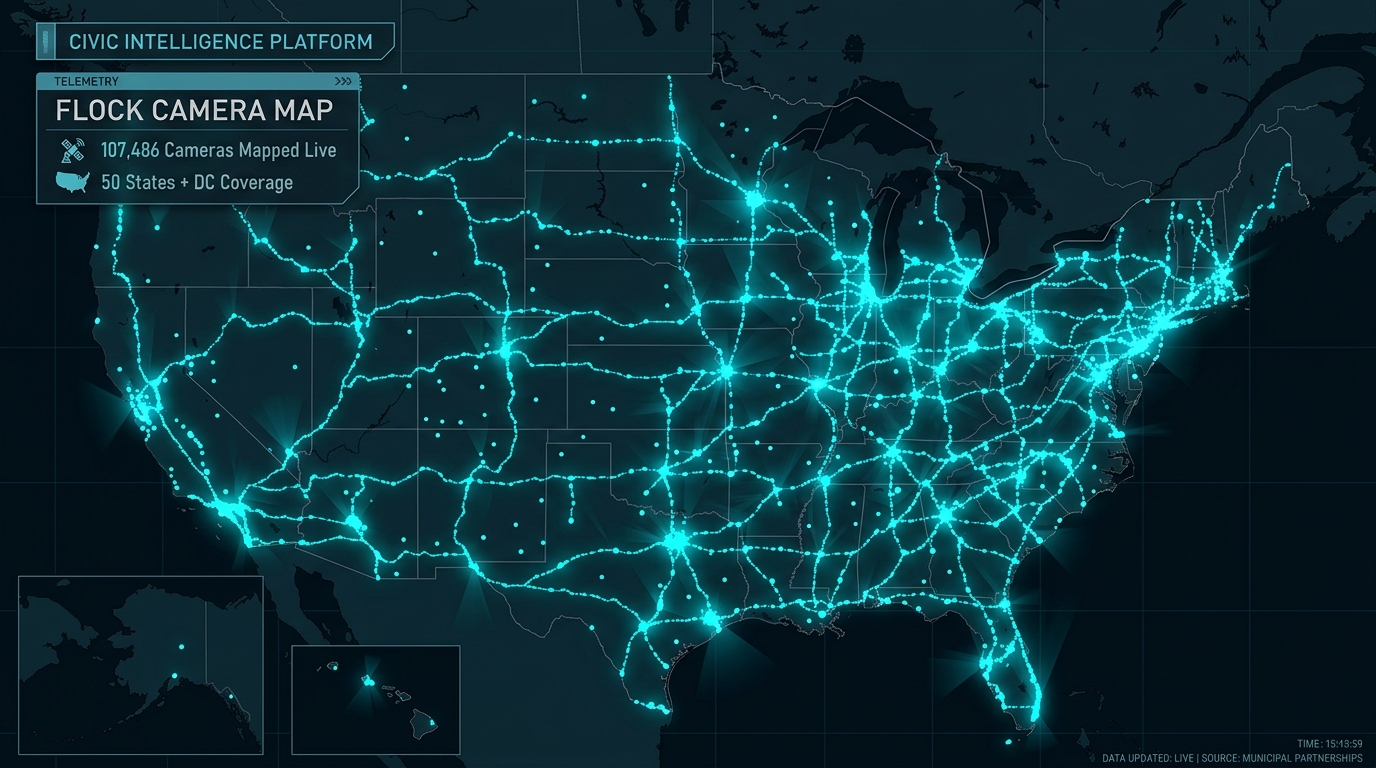
Can an Individual or HOA Buy a Flock Camera? The Complete Guide
As news reports and neighborhood forums highlight the rapid adoption of automated license plate recognition (ALPR) technology, private citizens, neighborhood watch organizers, property managers, and Homeowners Association (HOA) board members frequently ask:
- "Can an individual buy a Flock camera for their home or driveway?"
- "Can an HOA install Flock cameras at neighborhood entrances?"
- "How much does Flock charge private communities?"
- "Do private HOA cameras automatically share plate scans with local police?"
In 2026, an estimated 25% to 30% of all deployed Flock Safety cameras nationwide are funded not by taxpayer municipal budgets, but by private HOAs, commercial business improvement districts, shopping centers, and apartment complexes.
This guide provides the definitive legal, financial, and contractual answers regarding private Flock camera ownership, annual recurring pricing, and law enforcement integration.
1. Can an Individual Citizen Buy a Flock Camera?
The Short Answer: Generally NO for Solo Homeowners
If you are an individual homeowner looking to purchase a single Flock camera to monitor your personal private driveway, Flock Safety does not sell or lease hardware to individual solo consumers.
Why Flock Refuses Solo Consumer Sales
- Enterprise Subscription Model: Flock does not operate as a retail consumer hardware company like Ring, Nest, or Arlo. They do not sell standalone retail boxed products.
- Contractual Minimums: Flock contracts typically require organizational legal entities (such as incorporated HOAs, commercial property management firms, business improvement districts, or municipal police departments).
- Infrastructure & Permitting: Deployed units require right-of-way placement, cellular IoT provisioning, and continuous cloud subscription management that Flock reserves for community-level entities.
- Alternative Solutions for Private Individuals: Individual homeowners seeking driveway license plate recognition can deploy open-source consumer ALPR cameras using high-resolution 4K PoE IP cameras (such as Dahua or Hikvision ALPR models) integrated with local edge software like Frigate NVR, Plate Recognizer, or Home Assistant.
2. Can Homeowners Associations (HOAs) Buy or Lease Flock Cameras?
The Short Answer: YES — HOAs Represent One of Flock's Largest Customer Segments
While solo individuals cannot buy them, any legally registered Homeowners Association (HOA), Condominium Association, or Neighborhood Improvement District can enter into a contract with Flock Safety.
In hundreds of subdivisions across Texas, Georgia, Florida, California, North Carolina, and Illinois, HOA boards have installed Flock Falcon cameras at neighborhood entry points and arterial cul-de-sacs to log every vehicle entering and exiting the subdivision.
3. How Much Does a Flock Camera Cost for an HOA?
Flock operates strictly on a Software-as-a-Service (SaaS) subscription model. An HOA never owns the physical camera; rather, the community leases the hardware, cellular connectivity, software updates, maintenance, and cloud storage under a recurring annual contract.
2026 HOA Pricing & Fee Schedule
| Cost Component | Standard HOA Rate (Per Camera) | Notes & Details |
|---|---|---|
| Annual Subscription Fee | $2,500 – $3,000 / year / camera | Includes 30-day encrypted cloud storage, cellular data uplink, and software features |
| One-Time Installation Fee | $350 – $650 / camera | Covers professional site survey, ground auger/pole installation, and solar calibration |
| Contract Commitment Term | 2-Year Standard Minimum | Most HOA agreements require a multi-year contract commitment with annual renewals |
| Maintenance & Replacement | Included ($0 additional) | If a camera is damaged by lightning, fallen branches, or vandalism, Flock replaces the unit at no hardware fee |
| Typical 2-Entrance Neighborhood Cost | $5,700 first year, $5,000/yr ongoing | Based on 2 cameras capturing ingress and egress lanes |
For larger subdivisions with multiple entrances, four-way boulevards, or separate amenities gates, annual costs easily reach $12,000 to $25,000 annually, funded through resident HOA dues.
4. How Private HOA Cameras Connect with Local Police (The TALON Network)
When an HOA contracts with Flock Safety, the community board faces a critical governance decision: Should the HOA share its camera data with law enforcement?
The Three Law Enforcement Integration Models
- Full Police Integration (Default / Most Common):
- The HOA grants direct real-time access to the local police department or county sheriff's office.
- When a stolen vehicle, amber alert suspect, or felony-warrant vehicle passes the HOA entrance, the local police dispatch center receives an automated real-time hotlist alert.
- Police detectives can query the HOA's camera logs for investigative retrospectives (e.g., "Show all red pickup trucks entering the subdivision between 2:00 AM and 4:00 AM").
- Restricted "Audit-Only" Law Enforcement Access:
- The HOA retains ownership of search permissions. Police officers cannot freely browse the database but must submit a formal written request citing a verified police incident report number to access specific timeframes.
- Closed Private Bubble (Zero Police Sharing):
- The HOA retains 100% private control. The data is only accessible to designated HOA board members or hired private security personnel.
- Note: While an HOA can choose this model, Flock's sales representatives actively encourage police sharing, and over 85% of HOA clients opt into law enforcement data linkage.
- The Fourth Amendment Does Not Apply to HOAs: The U.S. Constitution protects citizens against unreasonable search and seizure by government actors (police, state agencies). Because an HOA is a private non-profit corporation, homeowners cannot claim a Fourth Amendment violation when their private HOA board installs cameras on common property.
- Expectation of Privacy on Public/Private Streets: Courts across multiple jurisdictions have held that motorists have no reasonable expectation of privacy regarding their license plates when driving on public roads or private subdivision streets visible to the public.
- HOA Covenants, Conditions & Restrictions (CC&Rs): Whether an HOA board can install cameras without a full neighborhood vote depends entirely on the subdivision's bylaws. If the board has broad authority over "common area capital improvements and safety measures," they can typically authorize a Flock contract without a community ballot.
- Data Retention Limits: Flock Safety contracts standardly enforce a strict 30-day rolling data retention window. After 30 days, unflagged vehicle sightings are permanently purged from the cloud servers unless tagged as evidence in an active criminal investigation.
- Review of Subdivision CC&Rs: The HOA legal counsel reviews existing Declaration of Covenants, Conditions, and Restrictions to ensure the board has spending authority for security capital expenditures without requiring an all-member special referendum.
- Ingress/Egress Traffic Survey: Flock sales technicians and HOA board representatives conduct a vehicular traffic volume audit. They calculate average daily trips (ADT) to determine whether dual-lane capture heads are required at primary boulevards.
- Solar Insolation Calculations: Technicians inspect potential pole locations using solar pathfinders to guarantee the monocrystalline 40W–60W solar panel receives a minimum of 4.5 peak sun hours daily, free from oak or pine tree canopy obstruction.
- Right-of-Way Permitting: If poles are situated within dedicated municipal easements or county road rights-of-way, Flock handles utility locating (Call 811 / Dig Safe) and encroachment permits. If placed on private HOA common ground, municipal permitting is typically bypassed entirely.
- Certified contractors install heavy-duty ground auger anchors or drill 3-foot concrete caissons.
- The 12-foot galvanized mast, LiFePO4 battery pack, Ambarella-powered Falcon head, and solar panel are secured and calibrated.
- Technicians perform live drive-by optical angle testing (calibrating camera tilt, roll, and focal plane) across day and night conditions.
- The HOA board president or designated security administrator accesses the Flock Safety web dashboard.
- The administrator signs the TALON Inter-Agency Sharing Agreement, electronically bridging the subdivision’s camera feed to the regional police dispatch CAD (Computer Aided Dispatch) and fusion center.
- Real-time vehicle logging commences immediately, with automated 30-day FIFO deletion cycles enabled.
- Mandatory Neighborhood Notification: Install prominent visual signage at subdivision entrances warning motorists: "Notice: 24/7 Automated License Plate Reader Active on Premises".
- Clear Written Access Protocols: Restrict access to search logs exclusively to certified incidents involving an active police report number, preventing volunteer board members from auditing neighbors' personal visitors or marital disputes.
- Independent Annual Audits: Commission an annual third-party review of system search logs to ensure that no board member or security volunteer has conducted unauthorized queries.
- Total Annual Cost (2 Cameras @ $3,000/yr): $6,000 per year
- Per-Home Impact: Exactly $24.00 per year ($2.00 per month) per homeowner
- Reserve Study Considerations: Because Flock hardware is leased rather than purchased outright, HOAs do not need to build large capital depreciation reserves for pole replacement, battery aging, or weather damage—Flock’s ongoing subscription guarantees perpetual hardware refreshes and zero-cost damage repairs.
- Search Your Neighborhood: Use our Interactive Flock Camera Map to zoom down to street level and click camera markers to view operating agencies and installation types.
- Run a Proximity Scan: Open Cameras Near Me to see the total number of documented ALPRs within a 5-mile radius of your home.
- Examine Camera Hardware: Read our comprehensive Flock Camera Hardware Specs to identify Falcon units mounted on black solar poles at your subdivision entrance.
5. Homeowner Privacy, Legal Rights & HOA Controversy
The installation of Flock cameras by HOA boards has sparked intense community debate across the United States. Residents frequently dispute whether volunteer HOA boards have the authority to place neighborhood residents under 24/7 automated vehicular tracking.
Key Legal & Privacy Considerations for Residents
7. The Procurement Process: Step-by-Step HOA Deployment Lifecycle
For HOA board members, architectural review committees (ARC), and subdivision trustees, understanding the exact timeline and operational steps required to install Flock cameras is vital for budget forecasting and community outreach.
Phase 1: Community Feasibility & Legal Review (Weeks 1–4)
Phase 2: Site Survey & Solar Shading Analysis (Weeks 5–6)
Phase 3: Hardware Installation & Anchor Boring (Week 7)
Phase 4: Law Enforcement Interconnection & Live Activation (Week 8)
Additional Legal Precedents on HOA Automated Surveillance
Across various state court rulings, including Florida (Woodside Village Condominium v. Jahren) and California (Nahrstedt v. Lakeside Village), courts have consistently upheld reasonable board-mandated common security systems, provided they serve a legitimate community safety interest and are applied uniformly without arbitrary discrimination. However, privacy rights organizations such as the Electronic Frontier Foundation (EFF) and the American Civil Liberties Union (ACLU) strongly urge HOA boards to adopt transparent community governance standards:
8. Budgeting for HOAs: Dues Impact and Financial Planning
How does an annual Flock camera contract impact individual household dues? In an average master-planned community of 250 single-family residences:
6. How to Check If Your HOA or Neighborhood Has Flock Cameras
Curious if cameras in your subdivision or daily commute are operated by the city police or a private HOA?
Explore These Cameras On The Live Map
Search your state or city to see verified camera locations and vision cones in real time.
Frequently Asked Questions
Common questions addressed in this guide.