Flock Camera Hardware Specs: Falcon Camera Dimensions, Sensor, Pole Diameter & Technical Breakdown (2026)
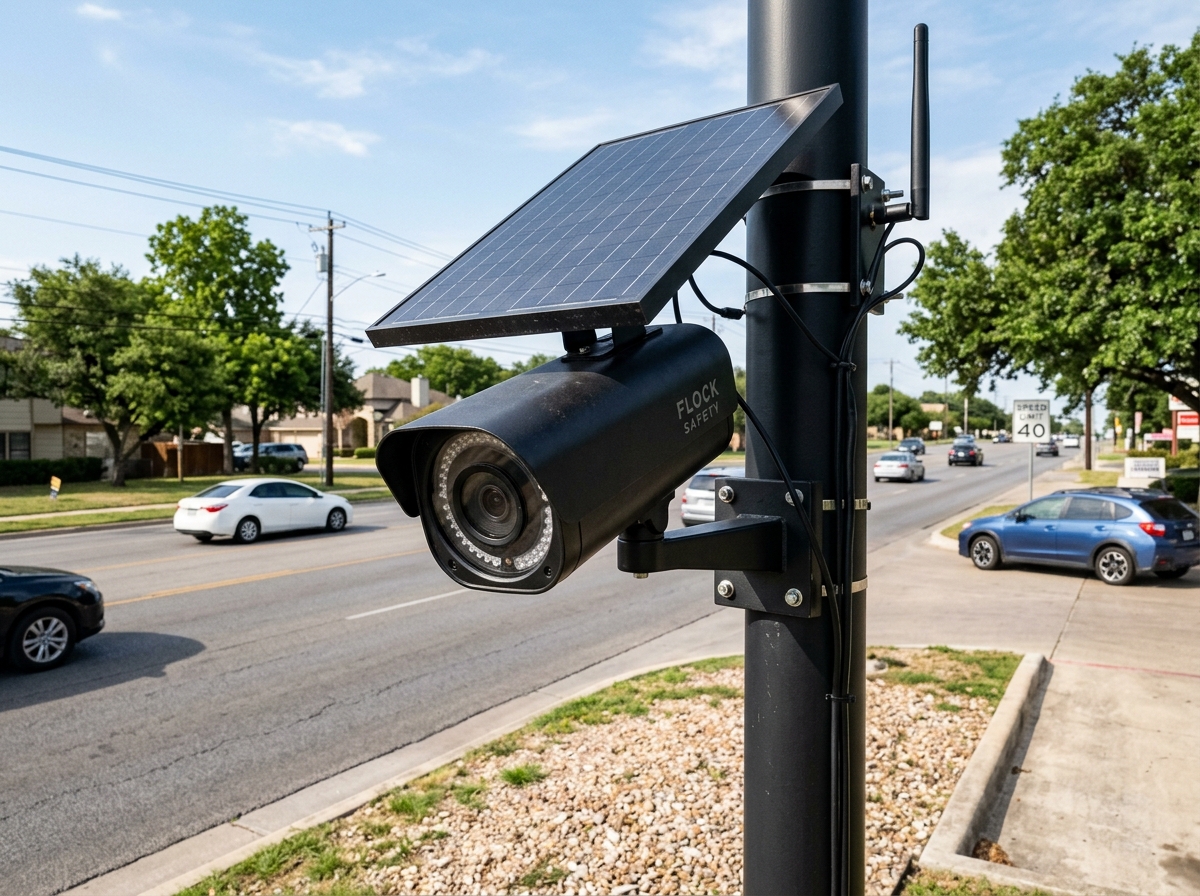
Engineering Teardown: Flock Safety Falcon ALPR Architecture
As automated license plate readers (ALPR) proliferate across American municipalities and residential subdivisions, civil liberties advocates, municipal procurement committees, and inquisitive motorists frequently question the physical construction, internal electronic architecture, and operational hardware specifications of Flock Safety cameras.
Manufactured and deployed by Atlanta-based Flock Safety Inc., the flagship Flock Falcon and its auxiliary iterations (Falcon Flex, Falcon Commander) represent a distinct category of edge-computing roadside surveillance appliances. Unlike traditional municipal red-light or speed cameras that rely on underground inductive loop sensors and hardwired AC mains power, Flock hardware is engineered for modular, rapid pole-mount deployment with zero external grid infrastructure.
This comprehensive technical analysis documents the precise dimensions, optical imaging sensors, thermal tolerances, pole mounting specifications, infrared strobe configurations, cellular communications, and edge AI compute pipelines that define Flock Safety hardware in 2026.
1. Physical Dimensions, Chassis & Enclosure Specifications
The mechanical housing of the standard Flock Safety Falcon camera is engineered to survive harsh roadside environments, extreme temperature fluctuations, high-velocity wind loads, and ballistic or particulate impacts.
Standard Falcon Camera Head Dimensions
- Enclosure Height: 11.2 inches (28.4 cm)
- Enclosure Width: 6.4 inches (16.2 cm)
- Enclosure Depth: 8.7 inches (22.1 cm) with protective sun/rain hood
- Total Head Weight (excluding battery/mast): Approximately 6.8 lbs (3.08 kg)
- Chassis Material: Heavy-duty, UV-stabilized injection-molded polycarbonate and powder-coated extruded die-cast aluminum alloy
- Ingress Protection Rating: IP66 / NEMA 4X certified, providing complete protection against dust ingress, airborne particulates, and pressurized water jets from severe weather
- Finish Color: Matte textured black or industrial graphite grey designed to blend into municipal utility infrastructure and suppress specular solar reflections
Mounting Mast & Pole Diameter Specifications
Search queries regarding "how tall are flock cameras" and "flock camera pole diameter" are frequently submitted by citizens and municipal public works engineers. Flock units are deployed using two distinct mounting paradigms:
- Dedicated Proprietary Ground Mast:
- Pole Height: Standard 12-foot (3.65 meter) or 14-foot (4.27 meter) height above ground level
- Pole Outer Diameter (OD): Exactly 2.375 inches (2-3/8" OD) schedule 40 galvanized steel pipe or lightweight hollow structural aluminum
- Wall Thickness: 0.154 inches (3.91 mm)
- Foundation Anchor: Driven earth auger ground screw anchor (depth 36 to 48 inches) or surface-mounted bolt-down baseplate on a 18"x18" concrete pad
- Municipal Utility / Wooden Pole Clamp-Mount:
- Deployed utilizing heavy-gauge stainless steel bandit straps (0.75" width, 201/316 stainless steel) or universal adjustable pipe clamp brackets fitting poles ranging from 4 inches to 16 inches in diameter.
- Wavelength: 850nm (near-infrared spectrum)
- Visual Appearance to Human Eye: A faint, dull cherry-red or crimson pinprick glow visible only when looking directly into the lens aperture along its optical axis
- Illumination Range: Up to 90 feet (27.5 meters) in total zero-lux ambient darkness
- Duty Cycle: Pulsed microsecond strobe synchronized precisely with the global shutter exposure to conserve power and prevent thermal overheating
- Why Do Drivers See a Red Glow? Because 850nm sits just on the boundary of human visual perception (which cuts off near 750nm–780nm). The human retina registers the extreme high-power output of 850nm emitters as a very dim red dot, while the digital monochrome imager perceives the scene in brilliant daylight-like illumination.
- System on Chip (SoC): Ambarella CV2x / CV22 / CV25 series Computer Vision SoC
- CPU Architecture: Quad-Core ARM Cortex-A53 processor (operating at up to 1.2 GHz)
- Neural Processing Unit (NPU): Ambarella high-efficiency CVflow® deep neural network hardware accelerator delivering 2.5 to 5.0 TOPs (Tera Operations Per Second) of INT8 tensor inference
- System RAM: 2 GB to 4 GB LPDDR4x high-speed low-power memory
- Internal Non-Volatile Storage: 32 GB to 64 GB industrial-grade eMMC 5.1 flash storage (operating in circular FIFO cache buffer)
- Edge AI Firmware: Proprietary Vehicle Fingerprint AI™ algorithm stack executed locally on the Linux-based embedded OS (kernel 4.19 / 5.10 LTS)
- Motion Triggering: Passive optical frame-differencing detects incoming vehicle movement entering the calibrated region of interest.
- Optical Character Recognition (OCR): The NPU extracts state jurisdiction, alpha-numeric plate characters, and plate layout style.
- Vehicle Fingerprint Classification: The neural model detects vehicle make, model classification (sedan, SUV, pickup, commercial flatbed), primary color, roof racks, tinted windows, altered exhaust, and distinctive bumper stickers.
- Local Hotlist Hash Comparison: The camera compares extracted plate strings against an encrypted, locally cached database of FBI NCIC, state amber alert, and stolen vehicle hotlists.
- Metadata Transmission: Instead of sending gigabytes of video, the device uploads a single 150 KB compressed JPEG package and JSON metadata payload via cellular uplink, consuming minimal bandwidth.
- Panel Type: High-efficiency Monocrystalline Silicon Solar Collector
- Power Rating: Standard 40 Watt to 60 Watt peak capacity (18V nominal)
- Dimensions: Approximately 26 inches × 20 inches × 1.2 inches (66 cm × 51 cm × 3 cm)
- Mounting Tilt Angle: Pre-set at 35° to 50° latitude-optimized tilt facing true solar south
- Frame Material: Anodized heavy-gauge marine aluminum with tempered low-iron hail-resistant glass
- Battery Chemistry: Lithium Iron Phosphate (LiFePO4)
- Nominal Voltage: 12.8V DC (4S cell arrangement)
- Amp-Hour Capacity: 20 Ah to 30 Ah (256 Wh to 384 Wh total reserve storage)
- Operating Thermal Range: -20°C to +60°C (-4°F to 140°F) with internal battery management system (BMS) over-charge, over-discharge, and thermal cut-off protection
- Cloud-Cover Autonomy: The LiFePO4 battery pack stores sufficient power to operate the camera continuously for 72 to 96 hours (3 to 4 consecutive days) of complete overcast, freezing rain, or heavy blizzard conditions without sunlight.
- Cellular Transceiver: Quectel or Telit multi-band LTE Cat-1 / Cat-4 cellular IoT modem
- Carrier Agnostic: Dual-SIM (eSIM / Multi-IMSI) auto-switching across AT&T, Verizon, and T-Mobile LTE bands (B2, B4, B5, B12, B13, B14 FirstNet, B66, B71)
- Antenna: Integrated low-profile puck antenna mounted on the enclosure top or high-gain omni-directional dipole whip antenna mounted to the mast
- Satellite Geolocation: Integrated GNSS receiver (GPS, GLONASS, Galileo) delivering precise spatial coordinates (latitude/longitude within ±2.5 meters), compass azimuth bearing (0°–359°), and microsecond atomic clock UTC time-stamping
- Encryption: All uploaded telemetry is encrypted in transit using TLS 1.3 / AES-256 tunnels directly to Flock Safety's AWS GovCloud tenant.
2. Optical Sensor, Dual-Imager Array & Lens Field of View
At the core of the Flock Falcon hardware is a custom optical bench featuring a dual-sensor imaging pipeline designed to capture both human-perceivable vehicle context and machine-readable retroreflective license plate telemetry.
| Component / Subsystem | Technical Specification | Operational Purpose |
|---|---|---|
| Primary Context Imager | Sony STARVIS CMOS or OmniVision Low-Light 4K Sensor | Captures full-color daytime contextual frames, vehicle make/model, roof racks, body damage, and bumper decals |
| Secondary ALPR IR Sensor | Global Shutter Monochromatic CMOS Sensor (2.1 MP to 5 MP) | Eliminates high-speed motion blur (up to 120 mph / 193 km/h); retroreflective license plate capture |
| Focal Length & Lens | 16mm to 25mm C/CS-mount varifocal telephoto lens | Narrow field-of-view (FOV) calibrated for precise single-lane or dual-lane coverage at 30 to 75 feet |
| Horizontal Field of View (H-FOV) | 18° to 26° horizontal aperture angle | Focused capture corridor avoiding extraneous peripheral noise |
| Shutter Speed Range | 1/1,000s to 1/10,000s (microsecond dynamic exposure) | Freezes fast-moving vehicle registration plates under direct headlight glare |
| Optical Resolution | 1920 × 1080 (1080p Full HD) up to 2560 × 1440 (2K QHD) | Sub-millimeter character extraction of alpha-numeric plate fonts |
| Capture Corridor Distance | 30 feet minimum to 85 feet maximum (optimal: 45–60 ft) | Setback distance from pole base to vehicle target point |
| Operating Vehicle Speeds | 0 mph to 120 mph (193 km/h) multi-lane velocity | Reliable plate extraction on suburban arterials and interstate highway corridors |
Unlike general surveillance CCTV cameras that utilize wide-angle panoramic fisheye optics (90°–120° FOV), a Flock Falcon's narrow optical cone focuses solely on the rear or front bumper of approaching and departing vehicles. This explains why motorists rarely notice a camera until they are directly within its 45-foot capture focal zone.
3. Infrared Night Illumination & Optical Strobe Array
A frequent inquiry among night drivers is "do flock cameras flash at night" and "why do flock cameras flash red or white".
850nm Semi-Covert Infrared LED Matrix
Flock Safety Falcon cameras do not utilize visible white xenon strobe flashes. Instead, they incorporate an integrated matrix of high-output 850 nanometer (nm) infrared (IR) light-emitting diodes:
4. Edge Neural Compute, Ambarella SoC & Onboard RAM
The defining differentiator of Flock cameras compared to older legacy ALPR rigs is Edge AI processing. Historical ALPR cameras streamed raw continuous analog video back to a central server rack, consuming massive cellular bandwidth. Flock executes machine vision directly on the pole.
Hardware Edge Compute Architecture
The Edge Inference Cycle (0.2 to 0.4 Seconds per Vehicle)
5. Solar Power Supply, Photovoltaic Array & Battery Chemistry
To achieve rapid installation without pulling municipal power permits, 80%+ of all Flock Falcon cameras are completely off-grid, powered by an autonomous solar harvesting subassembly.
Photovoltaic Solar Panel Specifications
Battery Chemistry & Energy Storage Subsystem
6. Cellular Connectivity, GPS Telemetry & Antenna Array
7. Comparative Technical Matrix: Falcon vs. Falcon Flex vs. Competitor ALPRs
| Specification Feature | Flock Safety Falcon (Standard) | Flock Falcon Flex (Portable) | Traditional Municipal ALPR (Rekor / Axon) |
|---|---|---|---|
| Primary Deployment Mode | Fixed 12-ft mast or utility pole | Magnetic mount, tripod, or trailer | Traffic light mast arm or patrol cruiser |
| Power Source | 40W–60W Solar + LiFePO4 battery | Hot-swappable battery / 12V DC auxiliary | Hardwired 120V AC / Vehicle alternator |
| Edge Compute | Ambarella CVflow NPU (Embedded) | Ambarella CVflow NPU (Embedded) | Centralized server / in-car MDC laptop |
| Optical Night Strobe | 850nm Pulsed Infrared | 850nm Pulsed Infrared | 850nm / 940nm IR or visible LED strobe |
| Max Processing Speed | 120 mph (193 km/h) | 100 mph (160 km/h) | 140 mph (225 km/h) |
| Weight | ~6.8 lbs head / 35 lbs complete | 4.2 lbs head unit | 15–40 lbs complex housing |
| Subscription Cost Structure | $2,500 – $3,000 / year / camera | $2,500 – $3,000 / year / unit | $15,000 – $30,000 one-time capital cost |
Hardware Teardown Summary
Flock Safety's architectural advantage does not stem from exotic military hardware, but from the elegant convergence of low-power Ambarella computer vision silicon, pulsed 850nm infrared optics, autonomous LiFePO4/solar energy balance, and cellular IoT uplinks. By packaging these components into an IP66 enclosure that mounts to a standard 2-3/8" steel pole in under two hours, Flock created an ALPR system that cities and HOAs can deploy without civil engineering permits.
Explore where these devices are installed across the country on our interactive Live Flock Camera Map or audit devices in your neighborhood via Cameras Near Me.
Explore These Cameras On The Live Map
Search your state or city to see verified camera locations and vision cones in real time.
Frequently Asked Questions
Common questions addressed in this guide.